Sunday, August 18, 2013

The State of the Youth

Walking up the dark 6th street of Guatemala City this past Sunday evening, we came upon a boisterous group of people standing around a large bonfire set up in front of a stage in the middle of the square facing the National Palace. A stage lined with candles, occupied by 5 or 6 people leading songs and chants to the rhythm of a drum line, was located behind the large circle of young people. Surrounding the fire, demonstrators, some of which were on stilts, of all ages, with painted faces, and seemingly modern interpretations of ancient Mayan clothes danced and sang around the burning fire pit. From adolescents to young adults, all were enjoying the brisk night air, the heat of the flames, and the opportunity to set their spirits on fire.
A booming female voice, sang and chanted over large speakers on either side of the stage. She, led by the drum line, came down from the stage and entered the circle around the fire. She was clad with a crown of leaves and a staff covered in vines; she was the leader of this celebration. This was a celebration of the youth; an indigenous celebration modernized as a demonstration for life and peace.
"We are the youth! We are the children of the children of the children of the children of slaves."  
The drums accompanied the chanting crowd as those present lifted their hands together in celebration. 
Photo By: Benjamin Hershey
"We are here to celebrate life! We are here for all the victims of genocide!"
The group denounced the death and violence occurring in Guatemala, calling for peace and for love of life.
"Life is Beautiful! Viva la Vida! [Live the Life] Viva la Vida!... "Live for the dreams, the song, the body, the dance. Feel it deeply in your heart!" 
The young people, the new generation, was embodied in this small celebration under the looming shadow of the National Palace. As rain slowly began to fall on the heads of the demonstrators, they gave thanks to the Earth for the water. They continued dancing in celebration of the gift from their mother the Earth. The demonstration slowly subsided, but the Guatemalan youth had shown that even when the rain falls, they will find a way to celebrate living.

This was the event that began this past week, my first week out of the NAPA-OT Field School. As the week progressed, this spirit-filled night continued to sit in the back of my mind. I began to reflect on the spirit of the youth and the presence of the new generation in Guatemala, to think about all the young lives and young leaders that were lost to the internal conflict.

(Not at La Limonada)
On Tuesday, I had the opportunity to visit La Limonada, an officiated slum in the ravines between Zone 1 and Zone 5 of Guatemala City. This community is famous for its violence, crime, and also its part in the documentary Reparando which you can watch on Netflix. Within this community, we visited a small supplementary school for children during their time outside of normal classes. Here they receive class, a meal, activities, and are also supported by a psychologist. This school has worked with our very own Cincinnati Occupational Therapy Institute (COTI) which provided sensory equipment such as a large platform swing, pillows, and sensory toys. The psychologist had received some training from occupational therapists in how to work with children who may need occupational therapy. She reported that she often uses the equipment with children during her therapy sessions and has used it with some students that she believes specifically need sensory strategies.

However, the most impressive aspect about this small school is clearly the young inspired staff of teachers and psychologist working there. They are all young adults who have decided to spend their time and career working in La Limonada to support the youngest members of the community as they attempt to gain an education. Bear in mind, we brought no cameras, no phones, and as we walked towards this area, a car actually stopped and warned us that we were in a dangerous place. Even Guatemalans have stigmas and fear concerning the community that these young people have chosen to make their responsibility. They are a clear testament to the power and strength of the Guatemalan youth as well as a clear symbol of the new generation emerging in Guatemala, a strong generation that has not had its leaders systematically killed in genocide or civil war. These leaders are beginning to take a stand.
On Wednesday, with a visiting family from the United States, we visited a young man that I had the pleasure of meeting two years ago when I came to Guatemala with Xavier's Occupational Therapy Department. Gerson Cerritos and his family lead a small church called City of Refuge that focuses in community outreach. One of the programs we learned about and were able to serve at was a weekly breakfast for individuals living with addictions. We heard the story of a man who was able to overcome alcoholism with the support of the community he found through the church. Gerson's parents began the church in order to provide, support, food, and in many cases housing to many of the community members. Gerson's family has grown far beyond all his brothers and sisters who continue to have strong involvement in the church to individuals who have no blood relations at all.

Gerson led us to the terrace of his home where we could see a vast overlook of Guatemala City. Here he passionately laid before us the vision and goals of his family for their ministry of solidarity in their community, Linda Vista. 
"You cannot really serve or feel empathy with someone unless you live and walk with them. This is what Jesus did; he felt what [the poor] felt." -Gerson Cerritos

From the summit of Volcano Acatenago
Even as leaders and innovators begin emerging in from the new generation of Guatemalan youth, there is still many obstacles to face for youth of this country. Throughout Guatemala children's homes for both children with and without special needs exist. Due to lack of resources, accessibility, affordability, and quality of healthcare, education, and other obstacles families are forced to give up their children to save their lives. Many Guatemalan children, both in homes and out, deal with violence, fear, and poverty every day. There are still many mountains to climb. However, the youth of Guatemala today show resilience, passion, faith, and determination in the face of oppression, poverty, prejudice, and structural violence, celebrating the hope they see on the horizon.


Monday, August 5, 2013

Complexities of Culture

My Spanish teacher is a bit of an odd guy. Besides being a self proclaimed rebel, rocking the long hair, and wearing at least one large silver or gold ring on each finger, he approaches the world and its diversity with some pretty strong and interesting opinions. He has told me stories of using his status as a basketball player for the Guatemalan army during the war to escape torture. He has recounted telling a variety of very important people to "Come mierda"  because they didn't like his hair and rings or they simply obligated him to do something. He apparently hates being obligated to do things. He has participated in multiple strikes here in Guatemala during his time as both an urban school teacher and a rural school teacher working with indigenous children who only speak the language Kachiquel, he is a "professional singer" (which I often get impromptu samples of during class), and he is a very talented artist. The shear dynamic nature of this guy is overwhelming and makes him a bit of a cultural phenomenon in and of himself.
In my 9 hours a week with this gentleman we dive into conversation of human rights, Guatemalan women, the culture of the United States, the death penalty, education, same-sex marriage, and really anything else we decide we would like to discuss. We sit on the terrace of an Italian restaurant in Guatemala and discuss the depth and breadth of the Guatemalan culture.
During my most recent class, a conversation  with this Guatemalteco about the indigenous culture gave rise to a discussion of cultural conservation and change. Here in Antigua, it is not an uncommon sight to see an indigenous woman, dressed fully in traditional traje, talking on a cell phone, while riding in a tuk tuk, a woman conserving traditions from before the conquistadors while also participating in contemporary society. In one small moment, you see the new and the traditional abruptly coexisting.
We had the opportunity to visit a group of indigenous Kachiquel women in San Antonio Aguas Calientes who demonstrated their indigenous roots by showing us how they traditionally weave, grind coffee with a stone, have elaborate marriage ceremonies (of which I was a part), and cook tortillas over a fire. While there I almost forgot I lived in a world with cell phones and the internet... until one of the women answered her blackberry during their presentation. What a fantastically odd cultural phenomenon, seeing a woman who uses a stone to grind her coffee answer a smart phone that had been tucked away safely in her indigenous gΓΌipil. I saw two worlds collide in the hands of someone who speaks a language tracing its origins to before the conquest of the Americas.
It makes me ponder the idea of conserving culture. Can the indigenous culture truly be conserved as if existing in a vacuum far removed from the "developed" contemporary world and its technology and ideals? It is always a bad thing to allow culture to change and be transformed by the times, to not preserve the culture? Could this idea of "culture"..."our culture"..."indigenous culture"..."developed culture" to which we often apply inherent worth, actually separate people sometimes because we want to conserve our separate "cultural identities" so fervently? How do we preserve the wonderful values of some cultures that are countercultural to the majority? How do we comprehend the mixture that comes from the new and old colliding? How do we reconcile a world of many cultures when those same cultures, be it North or Central American or any other, sometimes contribute to human rights violations, misogyny, hunger, greed, and structural violence?
These are the questions my Spanish teacher and I attempted to answer in our 3 hour class this past Thursday. Obviously we haven't solved the worlds' problems yet, but our discussion did seem to boil down to the idea of "dialogue.  We found that it is not that change in culture is always a bad thing; rather change is unjust when it is forced by the hand of another. When respectful dialogue occurs between cultures, those qualities that make a culture rich and beautiful can be preserved, while those qualities that lend towards more negative effects on our world can fall away into history. We realized that we have to approach other cultures... actually we should approach any conversation in general... with intent for dialogue.
As occupational therapists, especially those that cross the larger cultural spectrum, it is important to approach your client with a listening ear, an ear ready to converse and discover the most appropriate goals and methods. It is in dialogue that we uncover the most valuable and effective ways to walk with our clients. We first must be ready to listen and take the time, sometimes the large amount of time, to truly understand our clients. In reality we need to take the time to truly understand our friends, our parents, our teachers, and even our enemies. We can use dialogue to discover a stronger truth and see the humanity in the other rather than separating ourselves into cultures of "us" and "them".
It seems to me, that it is in that dialogue that we break down the complexities and deceptions of our world that allow us to persecute and oppress our fellow human beings. We then can walk with each other toward a simpler, more loving human culture -- a simple human culture expressed through the filters of our diverse experiences, resources, and actions.

Tuesday, July 30, 2013

The Power of the Imagination

As we explore and learn about the educational system of Guatemala, read articles about the educational modalities often used, and see first hand classes being given, we have come to realize, as mentioned in my previous post, that imaginative play and practice of creative thinking skills may not often be seen within the school system or even within the home. Bear in mind this is simply a perceived generalization rather than something we have discovered through our research, nevertheless it is worth contemplating.

This idea of the lack of opportunities to practice using the imagination, creative play, or critical thinking inspired a bit of reflection on my part in ideas of the imagination and its importance.

Take a moment and imagine if using the imagination were not revered or encouraged, and looking past reality to pretend were an unfamiliar exercise. Imagine if you were not taught to practice using creative skills to believe in a better tomorrow, to believe that you could be unique and anything you wanted to be, but rather you were taught to simply memorize the reality of the present given to you by those around you. Imagine if your innate human ability were to be suppressed by a hostile fatalism. Imagine if your future were determined by options defined by others, potentially others who do not want you to succeed, rather than your own dreams and ingenuity. Imagine if you were told that your fate was to be poor, and then you were never even given the practice, let alone the opportunity, to believe in the possibility of an alternative. Imagine not being able to experience even this simple exercise because you had never learned to suspend perceived reality for a moment.

The power of the imagination lies in its ability to look beyond the perceived present, liberate the
Kids Restaurant
mind from perceived restrictions, and allow a view of the world from a different angle. From childhood we pretend. We create worlds without rules or at least only with the rules we want. We create friends who are purple and tall with five eyes and tiny feet. We apply only the limits we define for ourselves.
"Freedom of choice does not constitute the basis of real power; rather it is the faculty of defining possible social choices that is the main source of power in any society." (Mulot, 2004)
Macadamia Nuts

It is in learning to define our own limits that we experience the freedom to imagine our future in whatever light we see fit. Our belief in a malleable future pulls us toward achievement, creativity, progress, and social change. Imagination allows us to live in a mentality where the answer to "What do you want to be?" and "What can you be?" are the same.

Imagination is what allows us to create organizations with radical ideas of changing the world, protecting the earth, or simply providing macadamia nuts to undernourished Guatemalan children. It allows us to believe in ourselves and our ability to design our own future.

Imagination allowed young activists to believe in civil rights and the potential for their realization within the United States using creative, imaginative, and non-violent stands against injustice. It is the imagination that allows someone to have the silly idea of making a bathroom into a garden. Young entrepreneurs, today, seeking new, sustainable, and beneficial services to provide the world are using their imaginations to believe in and work toward a better tomorrow for themselves and their community.

With the power of the imagination, we gain the countercultural idea that we can step outside the individualism, selfishness, prejudice, and stereotypes perceived as normal today in order to believe that we can care for someone, who maybe we never expected, more than ourselves. In all of this I came to realize, that it is from our innate ability to imagine that we also gain the experience of love.


Reference
Mulot , E. 2004. A historical analysis of the educational modalities of inequalities management in Costa Rica, Cuba and Guatemala. Compare: A Journal of Comparative and International Education, 34(1), 73-85.

Sunday, July 28, 2013

Occupational Imprisonment

The NAPA-OT Group
The idea of occupational imprisonment emerged from a discussion of the daily lives of those we are observing here in Guatemala as well as the impoverished in general. Occupational Imprisonment arises when an individual's occupational "need-to-dos", those tasks that we all must participate in to survive (e.g. finding/growing/earning and consuming food and drink, maintaining shelter, sufficient clothing), overburden all other occupational opportunity.

In a sense naming this phenomenon occupational imprisonment is a bit ironic in that many who are currently imprisoned within the penal system are in fact experiencing occupationally deprivation, having little opportunity to participate in meaningful activities, the exact opposite problem I am attempting to describe.
If someone is experiencing this occupational imprisonment, there is little opportunity to diversify the occupations performed by that individual, little room for Miss Frizzle's favorite advice, "Take chances, make mistakes, get messy." For example, an indigenous woman in Guatemala who is responsible for cooking tortillas, cleaning the home, caring for children including getting them to healthcare, weaving to earn an income, pleasing her husband, and abiding by social requirements for community ceremonies has little space or "occupational opportunity" to make progress toward something like women's equality or organizing communities to prevent land loss.

In the same way, a poor ladino man who wakes early to collect firewood for the breakfast fire, works all day in a construction site, returns to his own small rented plot of land to tend his own garden, and works to maintain their small casita has little opportunity to further his education so that he can acquire higher paying and more stable job opportunities. This also occurs in the United States. A homeless man who wakes at 4:00am under a thunderous overpass from a sleep only coaxed into existence through exhaustion works a day labor job all day to pay for his dinner, walking 6 miles to and from the labor office, has neither the energy nor the time to lend toward properly advocating for affordable housing in the urban center.

Because the systems are built in such a way that leaves no room to explore adaptations to these occupations without severe sacrifice and risk, it is nearly impossible for the impoverished to explore potential new methods or technology to increase resources or time. A woman making tortillas will not attempt a new method or a different meal because failure means her family does not eat that day when they need to, so she maintains the routine and never tries to innovate or imagine something different.

Those with the privilege of already having a surplus of technology and resources attempt to step in with NGOs or Non-profits and insert a solution that did not emerge from the people, that was not born of the native culture and customs. Therefore this new synthetic solution doesn't work or at least work well because it did not organically grow from the imaginations and hearts of those who need it. 

The oppressed become imprisoned in an impoverishing routine of their own necessary occupations, leaving no opportunity for imagination and innovation.

Then we, as the privileged, are able to step back, watch the systems and impoverishing routines, and say, "Work harder and you will make it. Pull yourself up by your bootstraps and you can be successful. You are poor because you are lazy and not working enough." When in reality they are poor because they can do nothing else but work.


Saturday, July 27, 2013

Week 2 - Guatemala

After two weeks here in GA, I am absolutely loving this field school. We have performed over 25 observations of social work visits and educational promoter observations. Our research is based in a small town called San Miguel Milpas Altas, a mostly sustenance farming village further into the mountains. We visit for approximately 4-5 hours a day and I and my partner follow an educational promoter around within the classrooms she is working or hike up and down the very steep streets to visit different homes and check on families and children with a social worker.

We have visited multiple levels of the tiered Guatemalan Health System and I believe I am beginning to understand some of the many barriers to health care delivery. The complex system of State organizations and NGOs create a healthcare system that is often inefficient and not client centered. However, on paper, the healthcare system and educational system look fantastic with multiculturalism, equality, and equal opportunity built right in. The caveat to this paper paradise is the actual enforcement and implementation of the laws that have been put in place. Based on different sources, somewhere between 2-5% of homicides are investigated, let alone convicted. This statistic parallels the implementation and resources allocated to the education and health care system by a largely corrupt government.

We began the process of Qualitative Data Analysis this week by forming the beginning ideas for a code book. We still have some data collection to finish up next week but because we have little time we are beginning early. We will be producing a 60 page written report from our findings hopefully at the end of the 4 weeks.

This week we spoke with the dean of the college of social sciences at a large university in Guatemala City concerning the history of structural violence in Nicaragua and the niece of a former president of Guatemala who is doing anthropological (and in my opinion occupational) research into safety perceptions and environmental risks for young girls. Her project is actually very interesting in that it first has multiple levels. She has a complex process of finding and working with women and young girls who have experienced domestic or sexual violence. Using the occupation of not only documenting the issues facing these girls but also allowing the girls to tell their story on a larger scale through videos this anthropologist is empowering and rehabilitating. 

The second level of her project is something they have named Safe Scaping. The young girls take GPSs throughout their town and mark down coordinates of where they feel safe, mildly safe, and unsafe. Using this activity the researchers have been able to pin point locations that are problematic for young girls and are now taking steps to alleviate those problems.

Ashley and Ryan
Also this week, I was indigenously married, for the second time. This is what I get for always being one of the only boys in this profession.

My best moment this week probably was discussing within our smaller group  a seeming cultural norm that may be impeding huge amounts of progress for Guatemalans. In reviewing and  discussing our observations within the classroom, we have realized that critical thinking and imaginative play are severely lacking within the education system as well as in general. Granted a generalization at this point, but it seems that ingenuity and imaginative thinking are simply not taught or at least not taught often. The main technique is rote memorization. For this reason, Common Hope has made it a particular goal to increase critical thinking within the school setting. 

The most exciting realization then was that the educational promoters, after looking back on our notes, were actively working to resolve this problem. For example a teacher asked questions about a book, "What color was the lion?", "Where did the mouse like to run?", whereas the promoter stepped in and began asking questions like, "If you were the mouse what would you have done?", "If you were a hunter and saw the mouse eating the rope, what would you have done?". The promoter then praised those students who were able to think outside the box and create answers that weren't based on pure memory of the story.

Worst moment... definitely tripping in the street and straining a tendon in my knee. It definitely reminded me of the many physical accessibility barriers that are still very present within Guatemala. But before we make Guatemala wheelchair accessible, we may want to also focus on decreasing barriers to actually receiving a legitimate wheelchair through the Guatemalan health system.

This is a very typical dilemma of a socially or otherwise oppressed group. The sufficient provision of resources is being prevented not only because resources are scarce, but also because the systems (international and domestic) are built in such a way that removes the power from the oppressed, effectively creating a web created to keep them trapped. 

We have learned that this can be referred to as the "core" and the "periphery". For example, countries who are part of the "core" hold the power to manipulate and form structures that then affect the periphery. An example of this might be CAFTA. Much of Central America currently could not function without the aid and economic interaction from the US. Therefore they have no ability to refuse or bargain for a more appropriate agreement that does not tip the scales in favor of the core. Because the oppressed countries are functioning on a baseline of survivorship, they have no room to take risks or make bargains. Literally, one day of bargaining or community organizing for some members of the community we are working in would mean no food for the family sometime later.

We are exploring and attempting to understand how the complex systems of economies, politics, healthcare, and education negatively affect the ability of everyday Guatemalans to perform in meaningful and sometimes even necessary areas of occupations.

Week 1 - Guatemala

After a hectic trip of 18 hours due to delays and then the airline delaying my bag, I finally arrived in GA Saturday morning July 13th at 7:00am. I spent the weekend with a friend visiting a variety of groups of people affiliated with different organizations here in GA. I also made a connection that I hope to use to go into La Limonada one of the most impoverished portions of Guatemala city.

I arrived at my home stay on Sunday night and met my family which consists of two parents and two young boys as well as another OT student in the field school. They are in GA terms around middle class and the mother loves to cook and explain her cooking for us. We began the fieldschool on Monday and I don't know that I have ever been more excited for 4 weeks before in my life. We are a group of OTs, anthropologists, a biomedical engineer, and a doctor who are first and foremost attempting to understand Guatemala from a holistic and structural perspective.So far we have had lectures looking at its history and health systems from a birds eye view. I am learning a lot of big picture systemic reasons why occupational therapy meets barriers in its delivery as well as the cultural differences that face potential therapists or other healthcare workers.

An interesting factor is the historical memory of the recent civil war and the desire to remember what happened has created a distrust in medical workers because many who reach out to the rural communities are employed by the government, a government, supported by the rich, that committed genocide during the civil war. Many indigenous are fearful of any interaction with government workers therefore they choose not to receive medical care.


Another interesting cultural difference is that, in many ways, humoral medical beliefs still permeate the populations, both indigenous and ladino. This can sometimes cause confusion or distrust of certain medical interventions because from this perspective they may seem counter productive

Our fieldschool is divided into three groups researching a different topic. One group is researching infant nutrition and cultural norms relevant to it. Another is researching the systemic barriers present to surgical referrals and reception. And finally my group is partnered with a pretty great organization called Common Hope and we are researching how social workers are supporting the progress of children's education within the program by visiting their families and how educational promoters (pretty much teachers teaching teachers better classroom management techniques) are being received by teachers. We talk a lot about the occupations these two groups (Social workers and educational promoters) use to create effective results and change within each of their respective settings.

 It is a wonderful exercise in using occupation to create social and structural change on an individual level as well as within the classroom as a whole. My job within this group is to do qualitative observations of educational promoters interacting with the teachers and students and social workers interacting with students and their families. I am responsible for taking notes on every single conversation that occurs within the class and between the teacher and the promoter.

I have 3 hours of one on one Spanish class/ 3 times a week with a Guatemalan Spanish professor. That can be pretty tiring but I have found my professor to be a rich resource for understanding structures and norms relevant to medical service delivery.

I have been surprised at how well my Spanish has held up, I have also been wonderfully surprised to find a great group of OTs who are really ready to think outside the box from the occupational perspective. I was pretty tired after the first week for sure and slept for most of Saturday morning.

I am ready for the next week.


Monday, October 1, 2012

Occupational Therapy: A Profession Born from Liberation and Empowerment

 Asclepiades
As discussed earlier, the American Dream was an influential factor in the formation of the United States Culture we know today. A focus on working as a moral obligation shaped the way US citizens viewed their everyday lives and activities. Occupational therapy however, or at least the founding concepts, have been used for ages in places like Greece and Rome. In 100BCE activities like "therapeutic baths, massage, exercises, and music" were prescribed by the Greek physician Asclepiades to treat human patients considered to be "insane" while 100 years later, Roman Celsus prescribed music, travel, conversation, light, and exhausting exercise for those he treated (Quiroga). Regardless of historic examples, humans have been engaging in everyday activities to fulfill their lives and enrich their lived experience for much longer than documented history. It is a natural instinct for humans to seek out activities that provide them with pleasure and fulfillment. It was only in the beginning of the 20th century that therapists professionally began to use this instinct to influence health and wellness. The origins of the occupational therapy profession are deeply shaped by three national and global occurrences that very much encapsulate the ideology that fuels the occupational therapist's perspective: 1) the Arts and Crafts movement in reaction to the industrial revolution, 2) the return of veterans  from World War I, and 3) the women's rights and suffrage movement
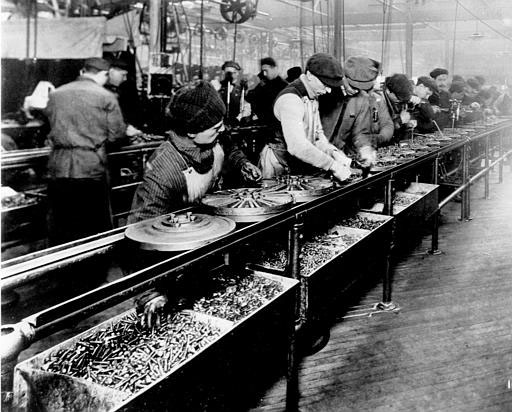
In the early part of the 1900s, two very important changes within our world were occurring that would ultimately affect the development and formation of occupational therapy. First, the industrial revolution was in full swing, increasing factory jobs but at the same time drastically altering what "work" looked like. Assembly line factories quickly overtook the job market and countless citizens found themselves completing only a portion of the work to create a product, sometimes never actually seeing the finished product. The creativity had been removed from craftsmanship, effectively degrading the individual to a single repetitive tool in a long line of tools to create interchangeable products. The Arts and Crafts movement, present in both Europe and the United States and usually only participated in by middle- and upper-class citizens, sought to counteract this distancing of the hand from creative work by studying and continuing various craft forms. Hand-made textiles, woodworking, metalworking, basketry, weaving, and sewing all became more than simple hobbies, but methods of liberation from the "tyranny of the machine" and grasping a more "productive and meaningful" lifestyle by working in the traditional manner.  They sought to maintain a moral work ethic that did not demoralize the human into the tool of the machine, but rather abide by the cultural norms that had already been deeply rooted in the Protestant Work Ethic. From this movement occupational therapists, or reconstruction aides as they were called at that time, usually middle- and upper-class,  found inspiration in how to provide treatment for their patients. By providing their patients with the opportunity to successfully complete the entire process of a craft, the therapists were able to provide a moral experience of satisfaction, self-worth, accomplishment, and learning while also possibly improving other aspects of the patient's quality of life in the same moment. This flavor can still be tasted in therapy sessions today, as craftsmanship are still used to evaluate, remediate, and support participation.
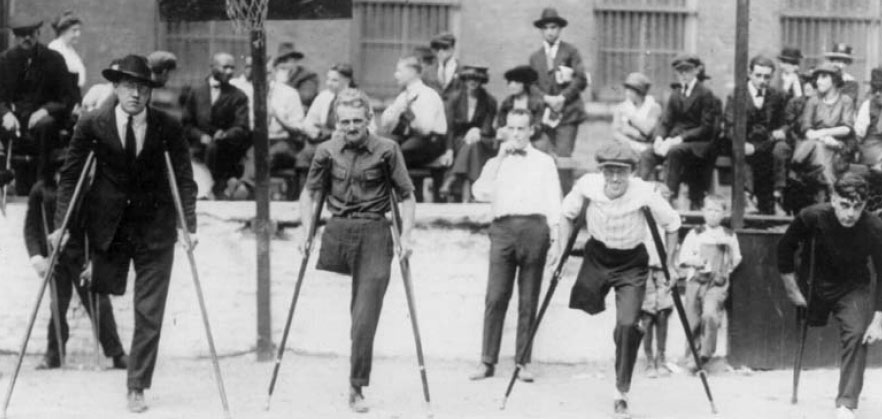
WWI Amputees 1919
Secondly, the United States entered World War II in 1917, creating an influx of veterans suffering from physical disabilities, mental disabilities, and what WWI veterans called "combat neurosis" or "shell shock" (what we call today Post Traumatic Stress Disorder). The combination of this population as well as the already present needs for Mental Health services sparked an increased awareness of the need for "mental hygiene" services throughout the United States. Psychology, psychiatry, nursing, and doctors began to seek out methods to facilitate the rehabilitation or "reconstruction" of veterans with both mental and physical disabilities. Many men returned home, unable to work in the traditional manner, unable to provide financial resources to their family. There was a desperate need for a treatment that could effectively improve the mental status of these veterans and return them to their roles as breadwinner as quickly as possible. In a culture where idle hands were immoral and dependency on others was pitiful, these individuals needed to discover a way to regain their independence. Occupational therapy seemed to fill that need. After therapists formed their first professional association in 1917 called the National Society for the Promotion of Occupational Therapy (NSPOT), one of the first tasks they undertook "was to convince the U.S. Army and the commander of the Allied Expeditionary Force in World War I, General John Pershing, to order the hiring of 5,000 reconstruction aides to provide occupational therapy to the war’s wounded."[Source] In fact, one of the founders of NSPOT had seen occupational therapy as the solution to the difficulty of unemployment and disabled veterans previously and had already created a workshop for the chronically unemployed.

Slagle
Addams
 Eleanor Clark Slagle was one of the most influential founders of the occupational therapy profession. She set the stage for the growth and development of a new profession for young women in a time when the movement for women's suffrage was slowly emerging within US culture. Born into a family of abolitionists, she was surrounded by the ideas of liberation and advocacy from an early age. When Slagle traveled to Chicago in 1911, while most women were ascribing to the traditional ideologies of domesticity, purity, piety, and submissiveness, Slagle was surrounded by the women of the Hull House, notably Jane Addams and Ellen Gates Starr,  who were actively involved in politics, pushing for the rights of women, and crossing social barriers not yet crossed by women in the US. Through her interaction with many who experienced social oppression and deprivation as well as the women of the Hull house, Slagle recognized her interest in the "unfair social attitude toward the dependency of the mentally and physically handicapped" by realizing the parallel between this social marginalization and that of the women of the time. Her experience working with people with mental illness specifically led her, in 1914, to found a workshop for the chronically unemployed called the Experimental Station. Once the high demand for this type of workshop for more individuals than simply those with mental illness was realized, Slagle began to accept individuals who were being limited by disabilities of all sorts. Because therapists had begun to use arts and crafts as a therapeutic method, she was able to work with both veterans and others who could no longer participate in the jobs they once had, to support themselves financially. They were able to sell their products and thereby at least somewhat reconstruct their roles within their everyday lives as a breadwinner and independent individual. She believed that not only could occupations provide effective rehabilitation for some illnesses, but it could also provide job training for those who might otherwise not have access, an ideology later employed by Herbert James Hall to support the Devereux Workshops.
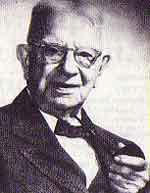
But Eleanor Clark Slagle was not the only one concerned with liberation and empowerment; in the early 1900s, William Rush Dunton, Jr., the "father of occupational therapy" was forming the Sheppard-Pratt Hospital, a hospital that encouraged patients to take active roles in their own care. After being influenced by William Tuke of the York Retreat, a Quaker-run home in England for those who experience mental illness, Dunton sought to incorporate a "judicious regimen of activities" into the care within his hospital. This "moral therapy" was meant to provide "habit training" for the patients, a method of replacing unhealthy habits by practicing new ones repeatedly, also allowing a more engaged participation in their own rehabilitation. At this point various institutions, mostly mental health facilities, were incorporating the idea of "occupations" into their everyday treatment by using crafts such as weaving, woodworking, metalworking, basketry, leather craft, and bookbinding. Patients were beginning to take an active role in their health and wellness instead of simply being the subject of treatments and surgeries by hospital staff. "Occupational therapy" began to be seen as a norm rather than an experiment and was largely recognized as an integral part in the betterment of patients' well-being, especially those within the mental health setting. Therapists and hospital staff were now able to provide services that surpassed mere "custodialism" and moved more towards a team effort between the doctor, nurse, therapist, and patient.
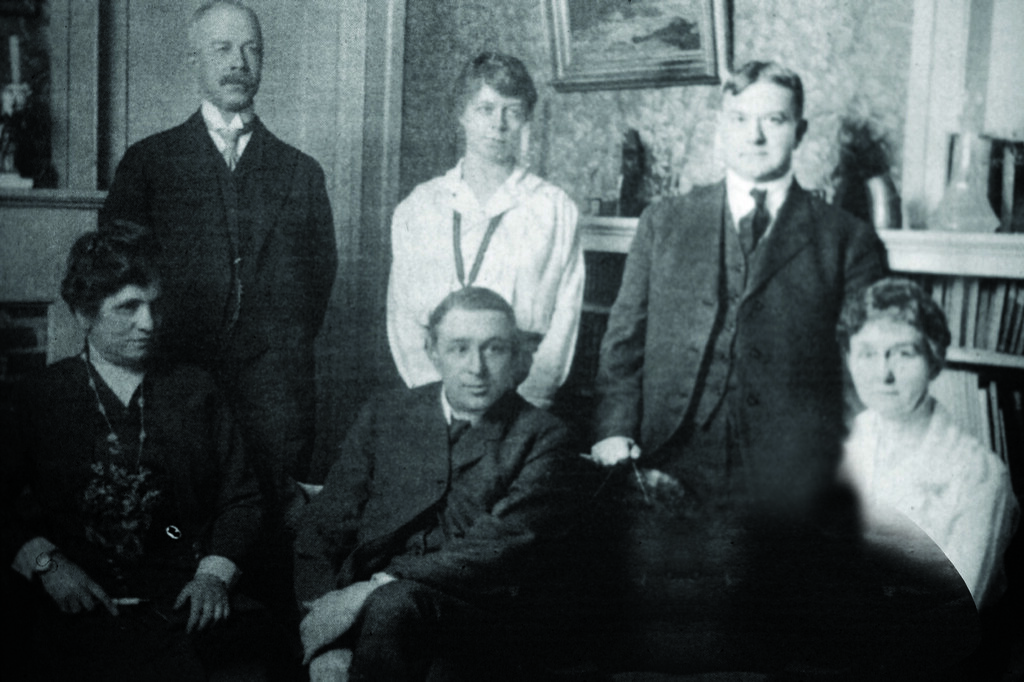

First Meeting of NSPOT
And so began the germination of the profession we know today as occupational therapy. From its roots, occupational therapy is a profession that seeks liberation and independence. It seeks methods to empower the human person to achieve meaningful participation. From liberating ourselves from the tyranny of the machine, to reconstructing our roles after combat experiences, to claiming the rights of all humans, male, female, physically disabled, mentally disabled, doctor, or patient, occupational therapy has worked to empower men and women to claim their right to participation through the work of their hands. Today, we continue to teach, support, and encourage all those who are deemed atypical to rebel and liberate themselves from the idea of normal by walking with them as they take an active role in working toward accomplishing meaningful occupations.

______   ______

But has occupational therapy ceased growing; has it become all that it can be? No. As a profession we are still learning and continue to reevaluate our perspectives and assumptions. Through globalization and cross-cultural interaction, we have begun to realize that many of the assumptions that stem from our roots in US culture may not apply in all situations.


Quiroga, V. A. M. (1995). Occupational therapy: The first 30 years 1900 to 1930. Bethesda, MD: The American Occupational Therapy Association.

www.aota.org